Gait Analysis using the Tendiboots™ System
What are Tendiboots™?
What are Tendiboots™?
What are Tendiboots™?

Detection, Tracking, and Communication- Tendiboots™ Canine objectivizes locomotion for: prevention in sporting dogs, lameness diagnosis, post-surgical follow-up, osteopathy consultation. This system can easily detect slight gait unbalance, has an accurate monitoring of gait evolution and confirms objectively the clinical observations.
Not only can Tendiboots™ be used on land, it can also be used seamlessly during hydrotherapy treatments. Special Hydro data such as water resistance and compare portions of the same session (flat vs. incline, different speeds) to quantify the immediate effect and track your dog's progress. This system allows us to observe how the dog’s gait changes when we adjust session conditions such as speed, incline, or water level.
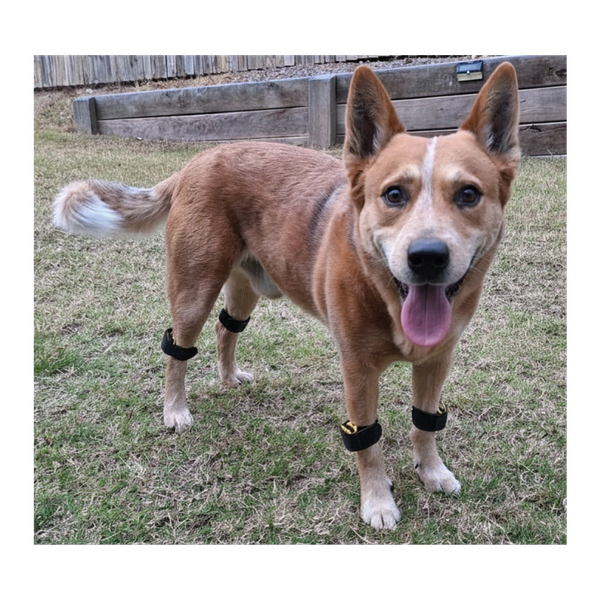
With all sizing available Tendiboots™ Canine adapts to all types of dog breeds. Tendiboots™ sit comfortably on the dogs front and hind limbs and initially will walk a little funny, but very quickly become used to them.
What are Tendiboots™?
What are Tendiboots™?
Instant results
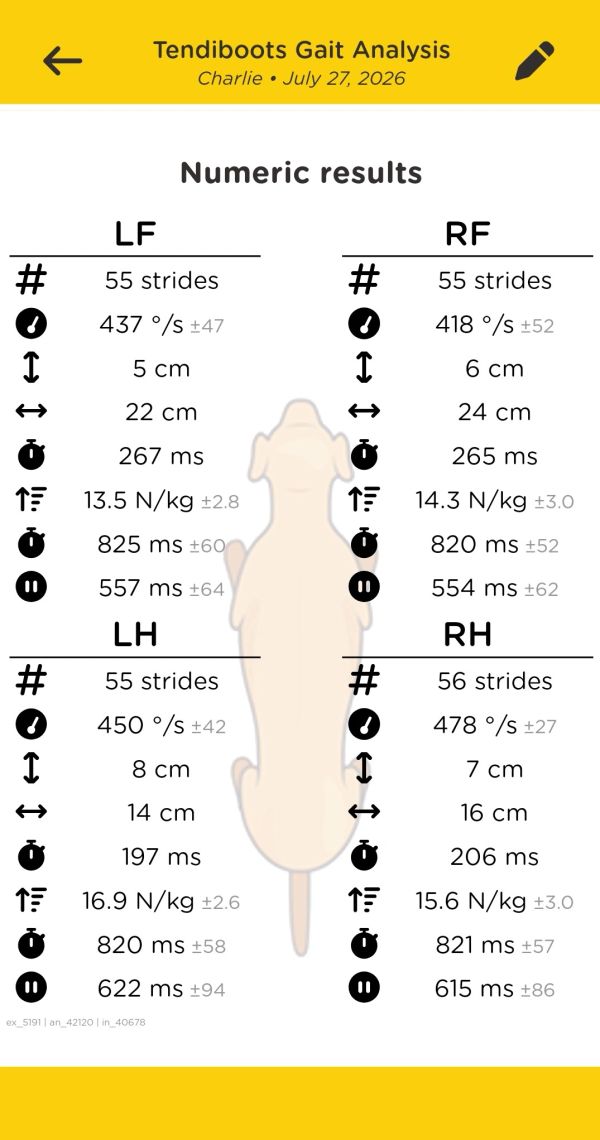
Gait analysis is instant with reports available after each assessment and tracking reports available to monitor decline or progress. Step count, Swing speed, Stride height, Stride length, Impact force, Stride duration and Ground support time are all recorded for each limb. Each sensor works independently also, meaning analysis of just front, or hind limbs can be assessed, or left side or right side - particularly useful for dogs who have had to have a limb removed. Each report and assessment will be explained to you during your session.
To learn more about Tendiboots™ and to see videos of them being used, visit their website https://ekico.fr/en/
